Diwali 2026 Holiday in Pakistan: Official Announcement for Optional Holiday on 2 February
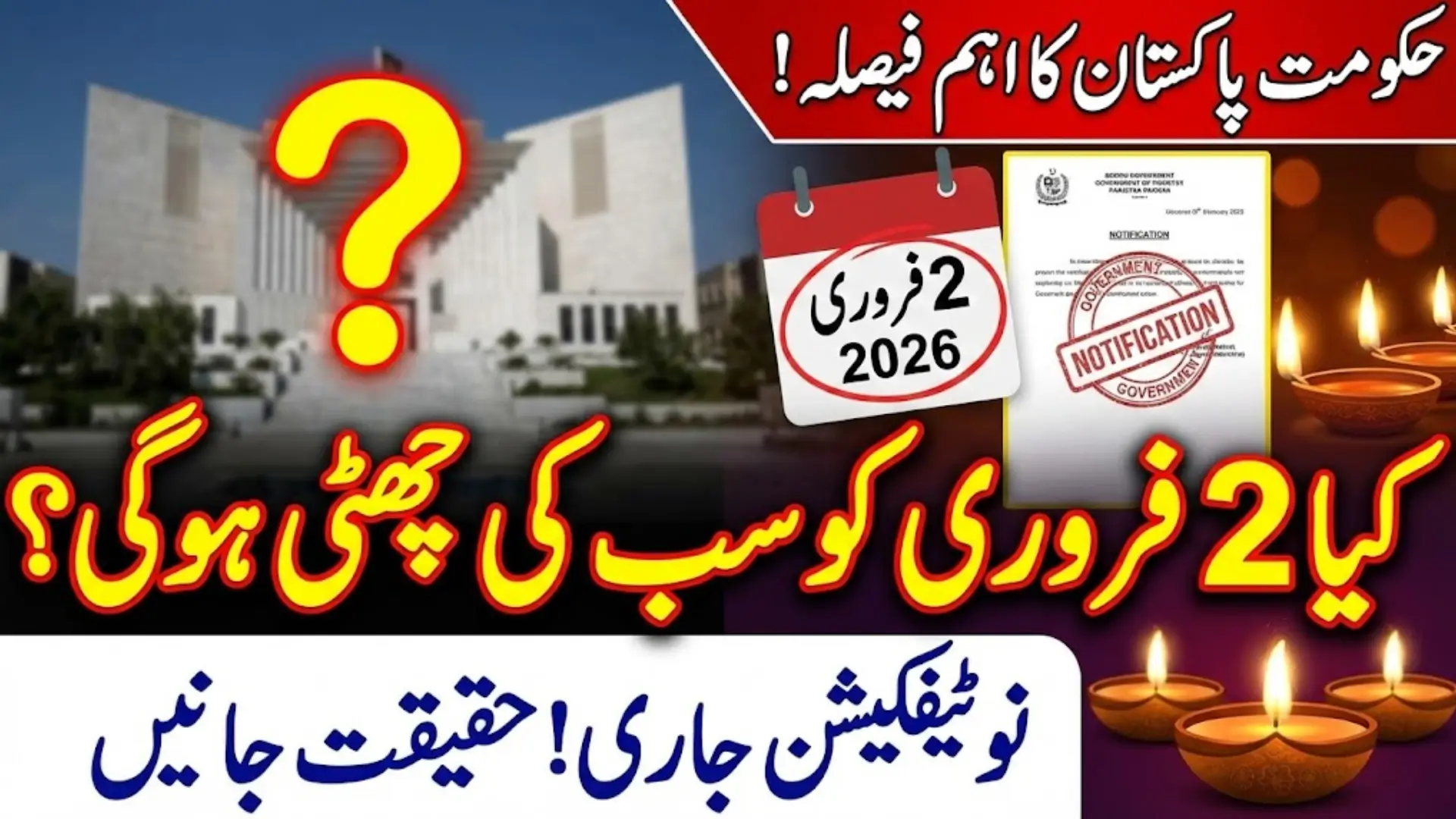
2 February Holiday in Pakistan
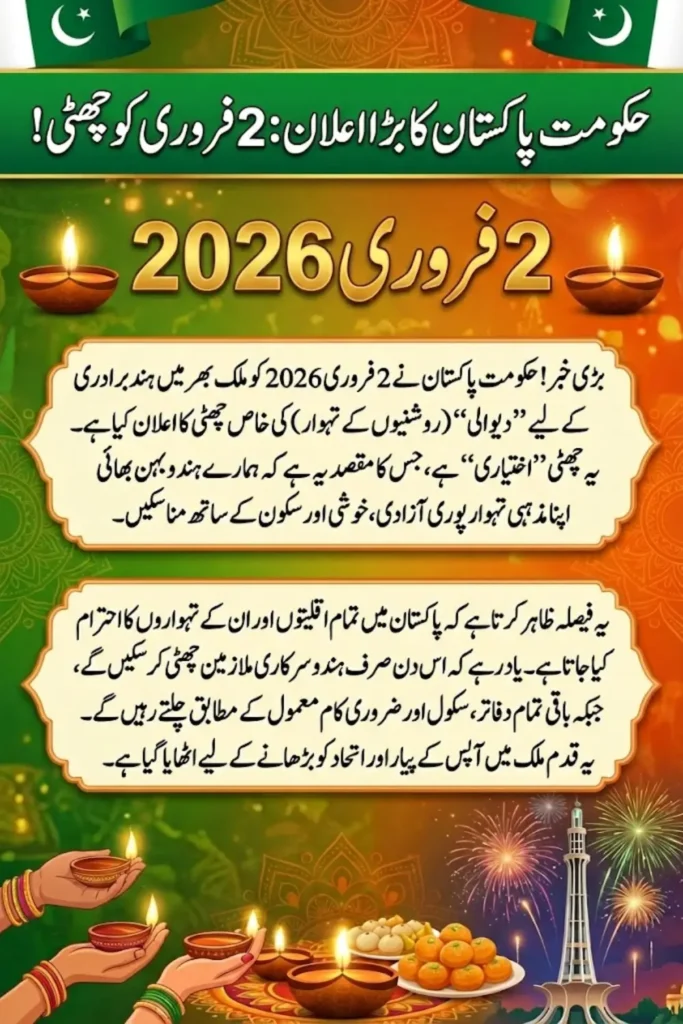
Government of Pakistan has officially announce that 2 February 2026 will be observe as an optional public holiday for the Hindu community to celebrate Diwali, also known as Deepavali. This is a significant step that reflects Pakistan’s commitment to recognizing the religious diversity and cultural inclusivity of its citizens. Diwali is one of the most revered festivals in Hinduism, symbolizing the victory of light over darkness and good over evil.
2 February 2026 Diwali Holiday Pakistan
Optional public holiday for Hindu community to celebrate Diwali
Holiday Announcement
2 February 2026 declared optional for Hindu employees
- Federal government offices included
- Public institutions & organizations
- Essential services continue normally
Significance of Diwali
Celebrates victory of light over darkness, good over evil
- Lighting diyas & candles
- Lakshmi Puja for wealth & prosperity
- Exchanging gifts and festive meals
Religious Inclusivity
Recognizes diversity and promotes interfaith harmony
- Encourages cultural respect
- Supports Hindu citizens’ rights
- Optional holiday ensures freedom to celebrate
Celebrations Across Pakistan
Sindh, Balochistan, Punjab, Karachi celebrate with lights & family gatherings

- Homes decorated with diyas
- Neighborhood events & family reunions
- Traditional sweets & meals shared
February 2026 Holidays
Optional Diwali holiday included in official calendar
- 2 February 2026 – Monday
- Diwali (Deepavali) – Optional Holiday
Government Commitment
Promotes unity, religious freedom, and cultural inclusivity
- Recognizes diverse religious practices
- Encourages mutual respect
- Supports Hindu community’s celebrations
Quick Actions / Key Points
- 2 February 2026 optional holiday for Hindu employees
- Non-Hindu staff continue regular duties
- Celebrate Diwali with lights, puja & gifts
- Recognizes religious diversity in Pakistan
- Strengthens interfaith harmony and unity
The Significance of Diwali (Deepavali)
Diwali holds deep religious and cultural significance for the Hindu community. It is a time for spiritual renewal, marked by the lighting of diyas (oil lamps), candles, and vibrant decorations. Families come together to celebrate with Lakshmi Puja, where prayers are offer to the goddess of wealth and prosperity. Homes are illuminate, and a sense of joy fills the air as families exchange gifts and share festive meals.
In Pakistan, Diwali is celebrate with great enthusiasm, particularly in regions like Sindh, Balochistan, Punjab, and Karachi, where a sizable Hindu population resides. This day holds immense cultural importance, and announcement of an optional holiday gives. Hindu community opportunity to celebrate this festival without work-related interruptions.
Details of the Diwali 2026 Holiday Announcement
According to official notification from the Government of Pakistan, 2 February 2026 will observe as an optional holiday for all Hindu employees across federal government offices, public institutions, and organizations. This ensures that members of the Hindu community can observe Diwali without the pressure of working on this significant day.
However, the holiday is optional for Hindu employees, and non-Hindu employees or departments involved in essential services will continue with their regular duties. This ensures the smooth functioning of the country’s critical services while allowing the Hindu community to celebrate freely.
The Importance of Religious Inclusivity in Pakistan
The announcement of an optional Diwali holiday is part of Pakistan’s broader initiative to promote religious freedom and cultural inclusivity. By officially recognizing Diwali, the government has demonstrated its respect for the diverse religious practices in the country. This move not only highlights interfaith harmony but also ensures that every citizen, regardless of their religion, has the opportunity to observe their sacred festivals.
In a country as diverse as Pakistan, celebrating religious diversity strengthens the fabric of society and promotes understanding among different communities. The Diwali holiday encourages mutual respect, showcasing how the Government of Pakistan is committed to fostering a sense of unity among its citizens, regardless of their faith.
Diwali Celebrations Across Pakistan
The Hindu community across Sindh, Balochistan, Punjab, and Karachi celebrates Diwali with great enthusiasm. On this day, homes are decorated with thousands of tiny lights, and streets are illuminated with diyas to symbolize the victory of light. It’s a time for family reunions, where loved ones gather to exchange gifts, perform Lakshmi Puja, and share traditional sweets and festive meals.
While Diwali is celebrated with spiritual devotion and joy, it is also a moment for the community to come together and strengthen bonds, both within families and across neighborhoods. The optional holiday on 2 February2026 ensures that the Hindu community in Pakistan can celebrate their festival freely and with dignity, reinforcing Pakistan’s commitment to respecting cultural diversity.
Public Holidays in February 2026
Alongside Diwali, the official holiday calendar for February 2026 includes various other public holidays. Here is a quick look at the February holidays:



| Date | Day | Event | Type |
|---|---|---|---|
| 2 February2026 | Monday | Diwali | Optional Holiday |
This simple table ensures that citizens are aware of the optional holiday for Diwali, helping them plan their schedules effectively.
Final Thoughts on the Diwali Holiday in Pakistan
The declaration of 2 February 2026 as an optional Diwali holiday in Pakistan. It is a progressive step that acknowledges and celebrates the diversity of the country’s population. It reinforces the government’s efforts to create an inclusive environment where people from different religious backgrounds feel respected and valued. By allowing Hindu citizens to freely celebrate their festival of lights, Pakistan is strengthening its position as a nation that honors religious freedom and cultural inclusivity.