Pakistan Links Power Subsidies With Benazir Income Support Programme in Major Reform Plan 2026
Linking Power Subsidies With BISP
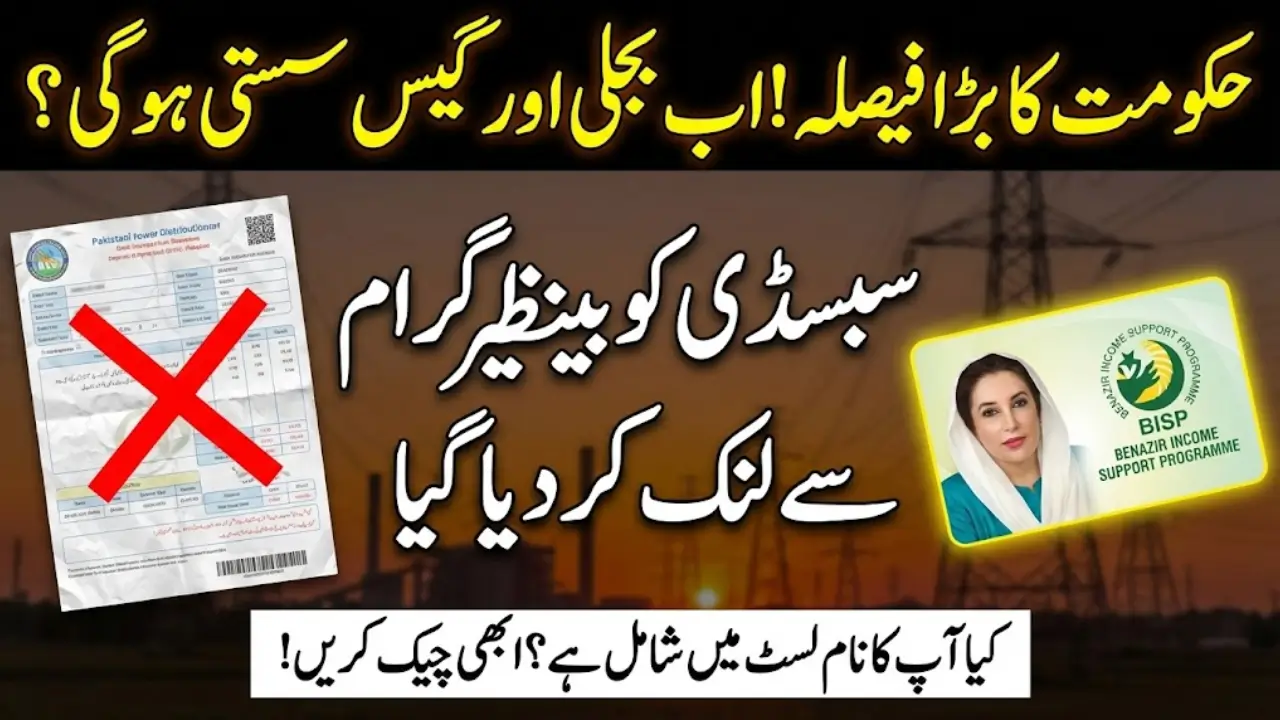
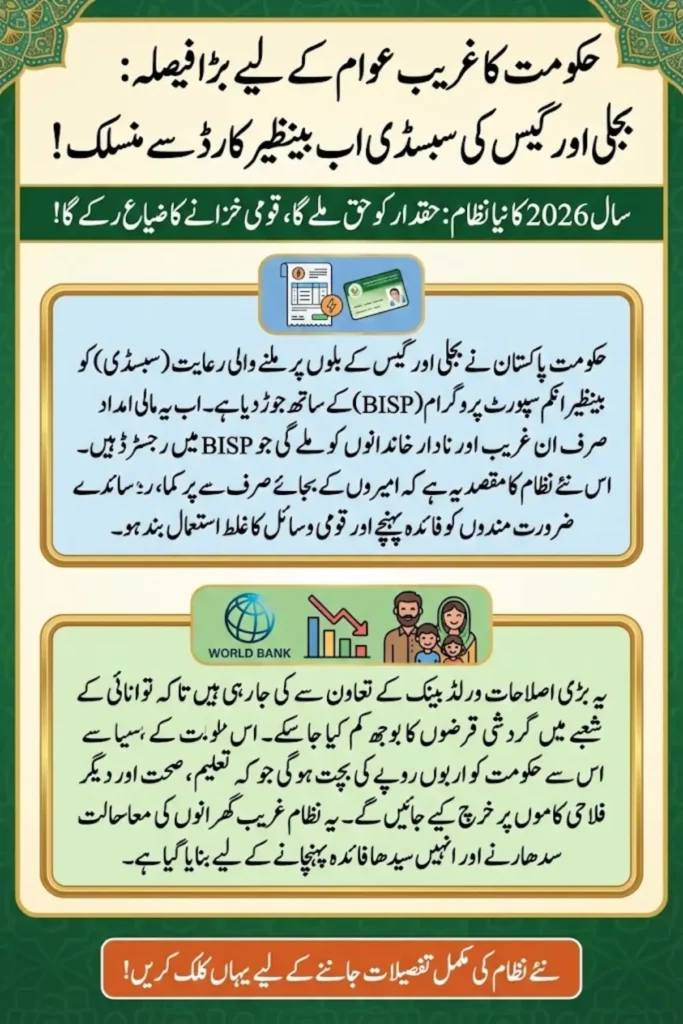
Pakistan is moving forward with a major subsidy reform that will link future electricity and gas subsidies with the Benazir Income Support Programme (BISP). The government, in collaboration with the World Bank, aims to improve targeting of subsidies, reduce inefficiencies in the power sector, and address the persistent issue of circular debt. This reform represents a significant shift in Pakistan’s approach to social protection and energy subsidies, ensuring that financial support reaches the households that need it the most.
Pakistan Subsidy Reform 2026
⚡ Future Subsidies & BISP Alignment
Electricity and gas subsidies will target BISP registered households
- Focused on low-income families
- Reduces inefficient subsidy spending
- Data-driven allocation through BISP
🎯 Targeted Social Protection
BISP identifies needy households via proxy means testing
- Cash transfers combined with health and education
- Enhances resilience of vulnerable populations
- Minimizes duplication and errors
🌐 Regional & Global Perspective
Pakistan among highest fossil fuel subsidy countries in South Asia
- Targeted programs reduce fiscal burden
- BISP emergency cash as regional model
- Supports equitable social outcomes
💧 Water & Agriculture Challenges
Inefficient irrigation and overuse of groundwater affects productivity
- Agriculture consumes 90% of freshwater
- Modern water management improves yields
- Supports agricultural households indirectly
🌾 Punjab Agriculture Productivity Project
High-efficiency irrigation & rainwater harvesting implemented
- Reduces irrigation water losses by 57%
- Increases cereal yields 14–31%
- Improves water efficiency 9–45%
✅ Expected Outcomes
Energy subsidies linked with BISP deliver targeted, efficient support
- Targeted aid for low-income households
- Reduces power sector inefficiencies
- Strengthens social protection & poverty reduction
Quick Actions / Key Points
- Future subsidies aligned with BISP
- Target vulnerable households for efficiency
- Minimizes fiscal waste & circular debt
- Enhances social protection and poverty alleviation
- Integrates energy & social programs via verified data
According to the World Bank, this initiative will also realign social protection spending and change its composition as a share of GDP. By linking energy subsidies with BISP, the government hopes to create a more efficient system that balances fiscal responsibility with social welfare. The reform is part of a broader effort to strengthen Pakistan’s economic resilience while reducing wasteful expenditure.
- Future subsidies will be aligned with BISP
- Targeting vulnerable households to improve efficiency
- Reducing circular debt in the energy sector
Also Read: Benazir Taleemi Wazaif 2026 New Registration and Eligibility Check
Objective and Importance of Subsidy Reform
The primary goal of the subsidy reform is to ensure that support is directed toward households that are most in need. Fossil fuel subsidies in Pakistan and across South Asia remain distortionary, consuming a significant portion of GDP without effectively helping vulnerable populations. By integrating these subsidies with BISP, the government can reduce wasteful spending and redirect resources toward more meaningful social protection programs.
This initiative is expected to strengthen households’ ability to cope with economic shocks, rising energy costs, and climate-related risks. The World Bank emphasizes that efficient social protection programs can significantly improve human capital outcomes by combining financial assistance with education and health interventions.
- Focus on households identified as needy through BISP
- Efficient allocation reduces misuse of subsidies
- Enhances resilience of vulnerable populations
Also Read: BISP Re-verification 8171 2026 In 5 Minutes Complete Guide
Role of Benazir Income Support Programme
BISP is Pakistan’s flagship social safety net, designed to reduce poverty and improve living standards for low-income households. Using proxy means testing, BISP identifies poor families and provides targeted cash transfers, along with programs aimed at health and education. The program also employs digital delivery systems to enhance accessibility and ensure timely support.
Linking energy subsidies with BISP will make the system more data-driven, allowing the government to track assistance effectively and reduce duplication. By connecting subsidies to verified BISP households, the reform ensures that aid reaches those who are genuinely eligible, increasing the program’s overall impact.
- Uses proxy means testing to identify poor households
- Combines cash transfers with health and education programs
- Digital systems improve transparency and delivery
Also Read: Benazir Kafaalat 2026 Payment Verification Process and Withdrawal Details
Regional Context and Global Perspective
Fossil fuel subsidies in South Asia remain a significant fiscal burden, with Pakistan among the countries with the highest distortionary subsidies. These subsidies often fail to reach the intended population, instead benefiting higher-income groups. By redirecting these resources into targeted social protection programs, Pakistan can achieve better economic outcomes while supporting vulnerable families.
The World Bank highlighted BISP’s emergency cash program during the COVID-19 pandemic as a successful example. Around 12 million newly poor or vulnerable households received one-time financial assistance through an automated, data-driven system. Such initiatives demonstrate the effectiveness of linking financial aid with reliable data systems.
- South Asian fossil fuel subsidies consume large portions of GDP
- Targeted social programs reduce waste and improve equity
- BISP emergency cash program as a successful regional model
Also Read: 8123 Ehsaas Rashan Program 2026: Complete Online Registration, Eligibility, and Benefits Guide
Social Protection and Dynamic Inclusion
Dynamic inclusion mechanisms in social protection remain rare in South Asia, but Pakistan has emerged as an exception. The country has developed a well-established social registry and offers self-registration options for eligible beneficiaries. These systems allow social programs like BISP to scale quickly during crises and maintain transparency in fund allocation.
Improved funding arrangements and information systems further enhance the effectiveness of these programs. By using verified data to identify households, the government can respond rapidly to emergencies while maintaining fiscal discipline. This model also reduces errors, duplication, and delays in subsidy delivery.
- Well-established social registry allows self-registration
- Rapid scale-up possible during crises
- Reduces errors and duplication in benefits
Also Read: PTA Ensures 5G Devices Pakistan Readiness Ahead of Spectrum Auction
Water and Agricultural Challenges in Pakistan
While the focus of the reform is energy and social protection, the World Bank also highlighted critical water and agriculture challenges. Pakistan is one of the most water-stressed countries in the world, with agriculture consuming more than 90 percent of available freshwater. Inefficient irrigation, groundwater depletion, and outdated farming techniques have caused declining productivity, particularly in Punjab.
Addressing these challenges is essential for economic stability and food security. Improved water management practices and irrigation efficiency are vital to support farmers and reduce vulnerability to frequent droughts. Subsidy reforms and social protection measures indirectly support agricultural households by freeing up resources for such interventions.
- Agriculture consumes over 90% of freshwater
- Inefficient irrigation and outdated methods reduce crop yields
- Water management is critical for food security
Also Read: BYD Atto 2 Pakistan: Limited-Time Offer Includes Free Charger, Insurance, and Charging Coupo
Punjab Irrigated Agriculture Productivity Improvement Project
The World Bank highlighted the Punjab Irrigated Agriculture Productivity Improvement Project as a successful intervention. The project introduced high-efficiency irrigation systems, improved water channels, constructed rainwater harvesting ponds, and promoted land leveling. These measures reduced irrigation water losses by 57 percent, increased cereal yields by 14–31 percent, and improved total water efficiency by 9–45 percent.
Such interventions demonstrate the potential of combining social programs with agricultural and infrastructure support. Improved water management not only boosts productivity but also strengthens the resilience of rural households, many of whom rely on both agriculture and energy subsidies to manage expenses.
- High-efficiency irrigation and water harvesting systems
- 14–31% increase in cereal yields
- 57% reduction in irrigation water losses
Also Read: Punjab School Teacher Interns’ Salaries to Be Released Within 14 Days: Minister’s Announcement
Expected Outcomes of Linking Subsidies With BISP
Linking electricity and gas subsidies with BISP is expected to deliver multiple benefits. Households identified through BISP will receive targeted support, ensuring that financial aid reaches those most in need. The reform also aims to reduce inefficiencies in the power sector, lower fiscal pressure, and contribute to poverty alleviation.
The integration of social protection programs with energy subsidies represents a data-driven, transparent approach to governance. This model can serve as a blueprint for future reforms in Pakistan and other South Asian countries.
- Targeted support for low-income households
- Reduced inefficiencies in subsidy distribution
- Strengthened social protection and poverty reduction
Also Read: Islamabad Ramadan Bazaars to Go Cashless: 10 Markets to Ensure Affordable Food During Ramadan
Key Features of the Subsidy Reform
| Feature | Description |
|---|---|
| Linked Program | Electricity & gas subsidies connected with BISP |
| Target Group | Low-income and vulnerable households |
| Fiscal Impact | Reduces distortionary subsidies and circular debt |
| Social Protection | BISP provides cash transfers, health, and education support |
| Regional Relevance | Model for South Asia to improve welfare efficiency |
FAQs
What is the main goal of linking subsidies with BISP?
The goal is to ensure subsidies reach households that need them most while reducing inefficiencies and circular debt.
How does BISP identify eligible households?
Through proxy means testing, cash transfers, and digital delivery systems for accurate targeting.
Which households will benefit first?
Low-income and vulnerable families registered under BISP will receive targeted energy subsidies.
How does the reform impact the power sector?
It improves efficiency in subsidy distribution, reducing financial losses and circular debt.



What role does the World Bank play?
The World Bank provides technical guidance, policy advice, and highlights successful programs like emergency cash support.
Also Read: Islamabad Ramadan Bazaars to Go Cashless: 10 Markets to Ensure Affordable Food During Ramadan